
projektowanie-postaci
Szablon Arkusza Postaci Nano Banana: Widok z 3 Stron
NanoBanana Team · 19 lipca 2026 · 7 min read
Keywords: nano banana pro, generowanie postaci ai
Published: 19 lipca 2026 Author: NanoBanana Team
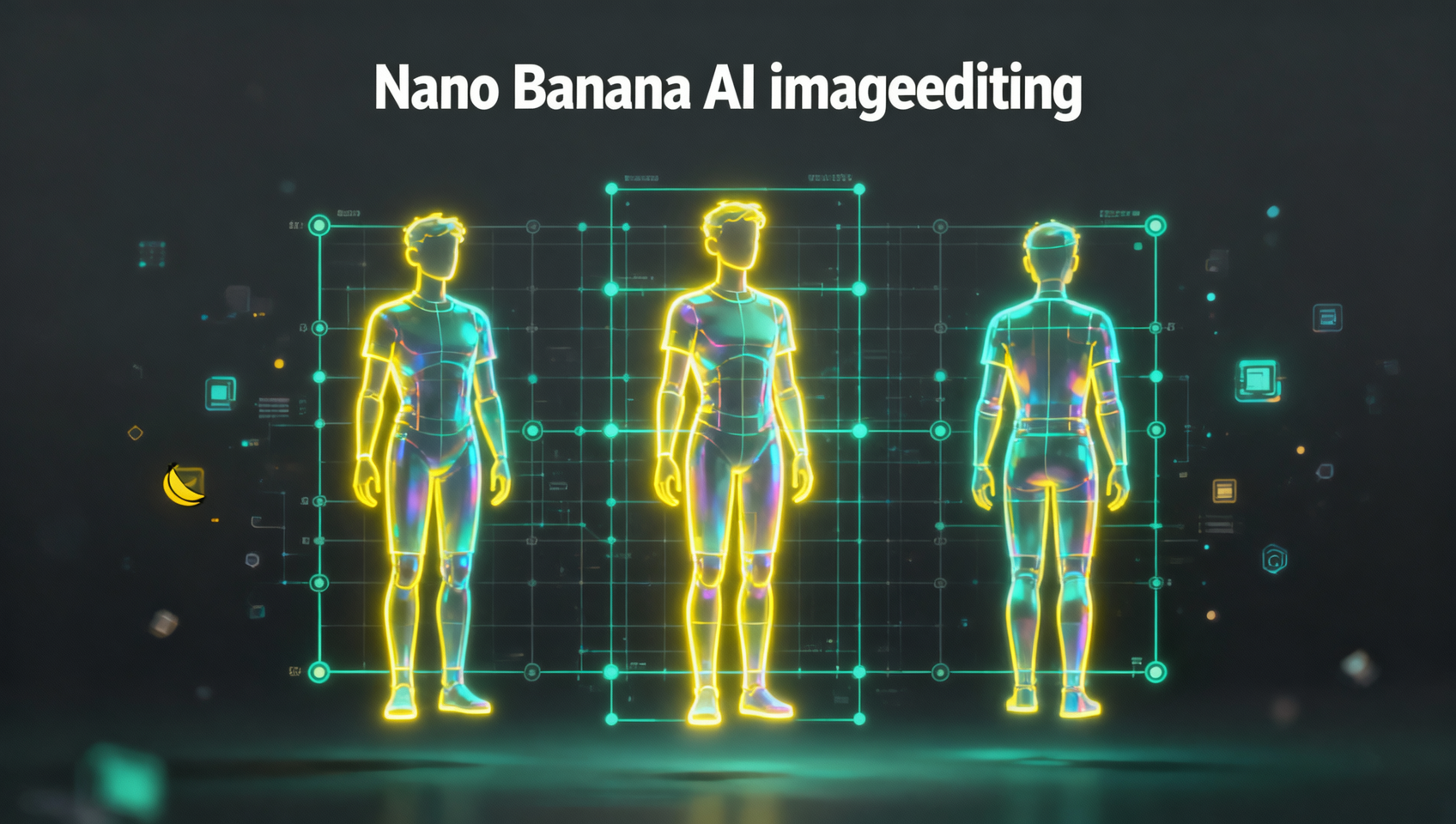
Rozwiązywanie problemu spójności w projektowaniu postaci AI
Utrzymanie spójności postaci across multiple generated images remains one of the hardest hurdles in generative AI workflows. Możesz wygenerować idealny portret, ale gdy poprosisz o profil lub ujęcie pełnej postaci, model często zmienia teksturę ubrania, strukturę twarzy lub paletę kolorów. Ta niespójność burzy immersję u deweloperów gier, animatorów i artystów koncepcyjnych, którzy potrzebują niezawodnych zasobów do procesów produkcyjnych.
Nano Banana Pro, dostępny w MidassAI Studio, rozwiązuje ten konkretny problem poprzez strukturalne promptowanie i kontrolowaną kompozycję. Wykorzystując dedykowany szablon arkusza postaci, możesz zmusić model do przestrzegania ścisłego układu, który oddziela detale twarzy od mechaniki ciała. To podejście nie polega na szczęściu; opiera się na ograniczeniach przestrzennych w prompcie i ustawieniach formatu, które kierują procesem dyfuzji.
Ten przewodnik szczegółowo omawia dokładny workflow generowania standardowego arkusza postaci branżowego. Koncentrujemy się na płótnie 16:9 podzielonym na cztery distinct panels. Lewa strona rezerwuje miejsce na ekstremalne zbliżenie (ECU) twarzy, podczas gdy prawa strona accommodates a full-body three-view turnaround (przód, bok, tył). Tło pozostaje czysto białe, aby ensure easy masking and integration into downstream tools like Photoshop or Blender.
Dla kogo jest ten przewodnik
Ten workflow jest przeznaczony dla praktyków, którzy potrzebują zasobów gotowych do produkcji, a nie przypadkowych eksperymentów. Jeśli jesteś artystą koncepcyjnym pitchującym postać klientowi, musisz pokazać, jak design wygląda z każdego kąta. Jeśli jesteś niezależnym deweloperem gier, potrzebujesz odniesień ortograficznych dla modelarzy 3D. Jeśli jesteś animatorem, potrzebujesz spójnych proporcji, aby uniknąć migotania zasobów w ruchu.
Ten szablon nie nadaje się do stylizowanej sztuki abstrakcyjnej lub portretów pojedynczych obrazów. Został specjalnie zaprojektowany dla technicznej klarowności. Wymóg białego tła ensures that you can rotoscope the character out without spending hours on manual selection tools. Podział na cztery panele zapewnia wystarczającą rozdzielczość dla detali twarzy, zachowując jednocześnie kontekst pełnej sylwetki.
Architektura szablonu
Zrozumienie układu przestrzennego jest critical before writing a single token. Nano Banana Pro interprets spatial instructions differently than standard midjourney-style generators. Nie opisujesz tylko subject; opisujesz architekturę płótna.
Docelowy format to 16:9. Ten szeroki format provides the necessary horizontal real estate to place the face shot and the body turnarounds side-by-side without crushing the resolution. Jeśli spróbujesz tego w kwadracie 1:1, model skompresuje widoki turnaround, tracąc detale w kończynach i fałdach ubrania.
Układ składa się z dwóch głównych stref. Lewa strefa occupies roughly one-third of the width i zawiera twarz ECU. To ujęcie must show the eyes, nose, and mouth clearly, with neutral lighting to avoid shadow confusion. Prawa strefa occupies the remaining two-thirds i zawiera three-view turnaround. Te figury must be aligned horizontally, standing on the same ground plane, with consistent lighting direction.
Inżynieria promptów dla układów wielopanelowych
Pisanie promptów do obrazów wielopanelowych requires explicit separation instructions. Nie możesz просто powiedzieć "pokaż mi arkusz postaci". Musisz zdefiniować panele. Nano Banana Pro responds well to structural keywords that denote separation.
Zacznij od definicji medium i stylu. Specify "character sheet design" and "orthographic view" to signal technical intent. Next, define the background. Use "plain white background" and "no shadows on floor" to prevent the model from generating a grounded environment that complicates extraction.
For the panel structure, use delimiters in your prompt. Skuteczna struktura wygląda następująco: Layout split into two sections. Left section: extreme close-up of face, neutral expression, high detail on eyes. Right section: full body character turnaround, front view, side view, back view, aligned horizontally.
Include negative prompts to suppress common artifacts. Terms like "multiple heads," "merged limbs," "color bleeding," and "textured background" should be excluded. If the model persists in adding shadows, increase the weight on the "white background" token. Consistency in clothing is maintained by describing the outfit in the initial subject definition and repeating key descriptors like "blue tactical vest" or "leather boots" in the turnaround section of the prompt.
Realizacja w MidassAI Studio
Accessing this workflow requires the MidassAI Studio environment where Nano Banana is hosted. The interface allows you to select the specific model version. Ensure you are selecting Nano Banana Pro, as the base version may lack the resolution fidelity required for small panel details.
Set your aspect ratio slider to 16:9 immediately. This locks the canvas shape before generation begins. Input your structured prompt into the text box. If the studio offers a "negative prompt" field, populate it with the artifact terms mentioned previously.
Once generated, inspect the image at 100% zoom. Check the hands in the turnaround view; this is a common failure point. Check the eyes in the ECU view for symmetry. If the layout is correct but the details are soft, do not regenerate the entire image. Use the inpainting or variation tools available in the studio to refresh only the problematic panel. This saves credits and maintains the overall composition.
Quick Takeaways
Typowe błędy i rozwiązywanie problemów
Even with a structured template, generative models can drift. One frequent issue is the "merge," where the face shot bleeds into the body shot. This happens when the separation instruction is too vague. To fix this, add "vertical divider line" or "clear separation" to your prompt. While you may not want a visible line in the final art, the instruction forces the model to respect the boundary.
Another issue is lighting inconsistency. The face might be lit from the left, while the turnaround is lit from the right. This makes the character sheet unusable for 3D modeling. Specify "studio lighting, front lit" globally in the prompt. Avoid environmental light sources like "sunset" or "neon signs" which introduce complex shadows that vary by angle.
Resolution loss is the third pitfall. If the generated image is too small, the face ECU will be pixelated. Ensure you are exporting at the maximum resolution allowed by your studio tier. If the textural details on the clothing are blurry, try adding "high fidelity texture" or "4k details" do wagi promptu.
Workflow iteracyjnego doskonalenia
Rarely is the first generation perfect. Treat the output as a base mesh. If the face is correct but the back view is distorted, crop the back view section and use an image-to-image pass to regenerate only that segment. You can feed the successful front view as a reference image for the back view generation to ensure clothing patterns match.
Nano Banana supports reference images within the MidassAI Studio interface. Upload your best front view as a reference lock. This tells the model to preserve the color palette and design elements while changing the angle. This technique significantly reduces the hallucination of new accessories or colors in the side and back views.
Finalizacja zasobów
Once you have a clean generation, the work is not entirely done. AI generators often leave slight artifacts on the edges of the character silhouette. Take the image into a raster editor and perform a clean cutout. Save the character sheet as a PNG with transparency. This file is now ready for your pipeline, whether that means importing it into a game engine or sending it to a modeling team.
The value of this workflow lies in repeatability. Once you refine the prompt structure for your specific art style, you can reuse it for every new character. This creates a standardized library of assets that look like they belong to the same project. Consistency is the hallmark of professional production, and structured prompting is the key to achieving it with AI.
For creators ready to implement this standardized workflow, the tools are available now. You can access the Pro model and the necessary aspect ratio controls directly through the studio interface.
Wypróbuj Nano Banana w MidassAI Studio to begin generating production-ready character sheets today.