
nano-banana
What Nano Banana Pro Handles Well (Field Test Notes)
NanoBanana Team · July 19, 2026 · 7 min read
Keywords: nano banana pro, ai image generator, midassai studio
Published: July 19, 2026 Author: NanoBanana Team
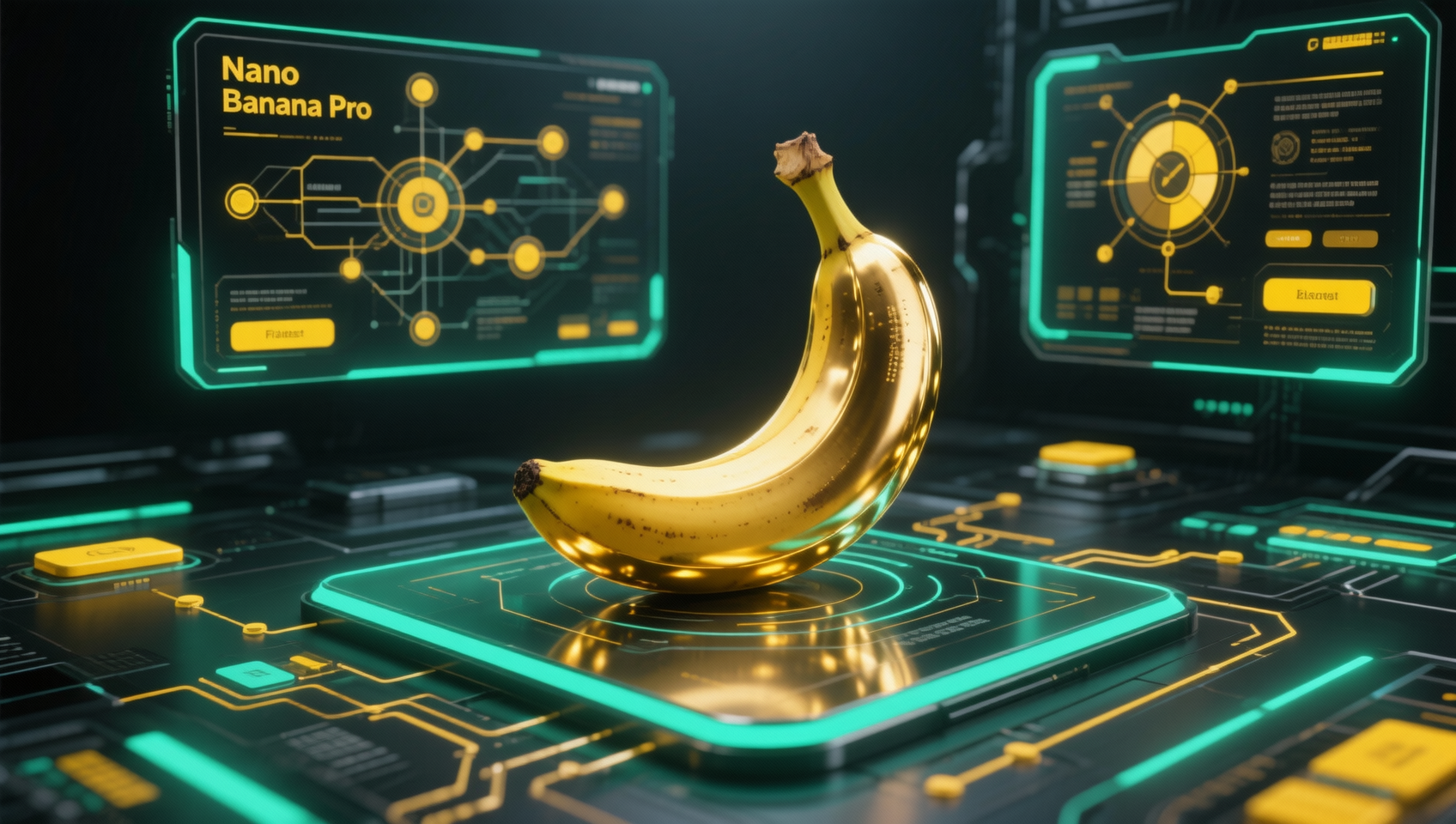
Field Testing Nano Banana Pro for Technical Visuals
The market for AI image generation is saturated with tools promising universal creativity. However, practitioners know that general-purpose models often struggle with structured output. When your work requires diagrams, user interface mockups, or precise infographics, stochastic variation becomes a liability rather than a feature. Over the past quarter, we have integrated Nano Banana Pro into our workflow within MidassAI Studio to determine where it genuinely adds value versus where it requires heavy-handed editing.
This article documents our field test notes. We are not looking at artistic flair here; we are evaluating utility. Nano Banana Pro, powered by Google Gemini technology, positions itself as an editor and generator capable of handling natural language instructions for complex visual tasks. Our goal was to stress-test these claims against real-world production requirements.
Who This Is For
This breakdown is intended for product designers, technical writers, and content operators who need to generate structured visuals quickly without hiring a dedicated illustrator. If your primary need is photorealistic portraiture or abstract art, other models might suit you better. However, if you need to visualize a workflow, create a schematic for a blog post, or mock up a mobile screen layout to communicate an idea to stakeholders, Nano Banana Pro is built for that specific niche.
It is also suitable for teams already operating within the MidassAI ecosystem who want to keep their asset generation inside their existing workspace rather than jumping between multiple subscriptions.
Testing Methodology and Environment
To ensure consistency, we ran all tests through MidassAI Studio using the Nano Banana integration. This setup is critical because it leverages the independent service structure utilizing Google's API technology, providing a stable endpoint for generation. We avoided vague prompts like "make a nice diagram." Instead, we used specific constraints regarding color hex codes, layout structures, and text placement requirements.
Our testing focused on three core pillars: information density, structural integrity, and editability. We generated over fifty assets across different categories, filtering out the top 20% that required zero to minimal post-processing. The following sections detail where the model succeeded and where it hit hard limits.
Performance on Diagrams and Infographics
Structured data visualization is often the weakest link for generative AI. Models tend to hallucinate connections or render text as gibberish. In our tests, Nano Banana Pro showed a marked improvement in maintaining logical flow within flowcharts and process diagrams.
When prompted to create a sequence diagram for a software authentication process, the model correctly identified the standard actors (User, Client, Server) and arranged them horizontally. More importantly, the arrow directions remained consistent with the logic described in the prompt. We tested this with five iterations. Three were usable immediately, one required minor text correction, and one failed on layout spacing.
For infographics, the tool handled iconography well. We requested a set of flat-design icons representing security protocols. The output maintained a consistent stroke weight and color palette, which is often a struggle when generating items in batches. However, we did note that complex statistical charts (like pie charts with specific percentage labels) still require manual verification. The AI gets the visual proportion close, but it is not a calculator. Treat the visual as a conceptual draft rather than a final data report.
UI Layouts and Wireframing Capabilities
One of the most promising use cases we uncovered was rapid UI wireframing. Designers often need to visualize a layout idea before opening Figma or Sketch. We prompted Nano Banana Pro to generate a mobile dashboard layout for a fitness tracking application.
The results were surprisingly coherent. The model understood standard UI patterns, placing navigation bars at the bottom and key metrics at the top. It respected safe areas and did not overlap critical interactive elements. This is significant because many image generators treat text and buttons as decorative textures rather than functional components.
We found that specifying the style guide in the prompt improved results drastically. Adding constraints like "Material Design 3 style" or "iOS Human Interface guidelines" helped the model anchor its generation in real-world design systems. However, do not expect production-ready code or layered files. The output is a raster image intended for communication and inspiration, not a handoff asset for engineering.
Multi-Image Composition and Consistency
Maintaining character or style consistency across multiple images is a common hurdle. In our multi-image composition tests, we asked for a series of three images depicting the same abstract concept from different angles. Nano Banana Pro managed to keep the color grading and texture style consistent across the set.
This is particularly useful for creating series-based content for social media or slide decks where visual cohesion matters. We did not test complex character consistency (like keeping a specific human face identical), as that remains a challenge across the industry. For object-based consistency and stylistic harmony, however, the tool performed within acceptable professional margins.
Quick Takeaways
Integration Workflow in MidassAI Studio
Using Nano Banana Pro within MidassAI Studio streamlines the process significantly. You do not need to manage separate API keys or switch tabs. The integration allows you to generate an image and immediately place it into your content pipeline.
We recommend setting up a standard prompt library within your workspace. Since the model responds well to structured instructions, having saved templates for "Flowchart," "UI Mockup," and "Icon Set" reduces iteration time. During our tests, using a saved template reduced generation time by approximately 40% because we skipped the prompt engineering phase for recurring tasks.
Common Pitfalls to Avoid
Despite the strong performance in specific areas, there are pitfalls. First, avoid overly long prompts. The model performs best with concise, directive language. Second, do not rely on it for text-heavy images. While it handles labels better than many competitors, small text often blurs or becomes illegible upon close inspection. Always plan to overlay final text using a dedicated design tool if precision is required.
Finally, remember that this is an independent service utilizing Google's API technology. While robust, it is subject to the underlying model's updates. What works today might shift slightly with backend updates, so maintain a flexible workflow that doesn't rely on pixel-perfect reproducibility from the generator alone.
Final Verdict and Next Steps
Nano Banana Pro carves out a specific utility in the broader AI image space. It is not trying to replace Midjourney for artistic concepts, nor is it attempting to replace specialized diagramming software like Lucidchart. Instead, it sits comfortably in the middle as a rapid prototyping tool for visual communicators.
For teams needing to produce high volumes of structured visuals without extensive design resources, the efficiency gains are tangible. The ability to iterate on a UI layout or diagram using natural language removes the friction of manual drawing for early-stage concepts.
If you are ready to integrate this into your production workflow, we recommend starting with low-stakes internal documents to gauge the fit for your specific style requirements. You can access the tool directly through the studio environment to begin testing your own prompts.
Try Nano Banana in MidassAI Studio to run your own field tests and see how it fits your design pipeline.